
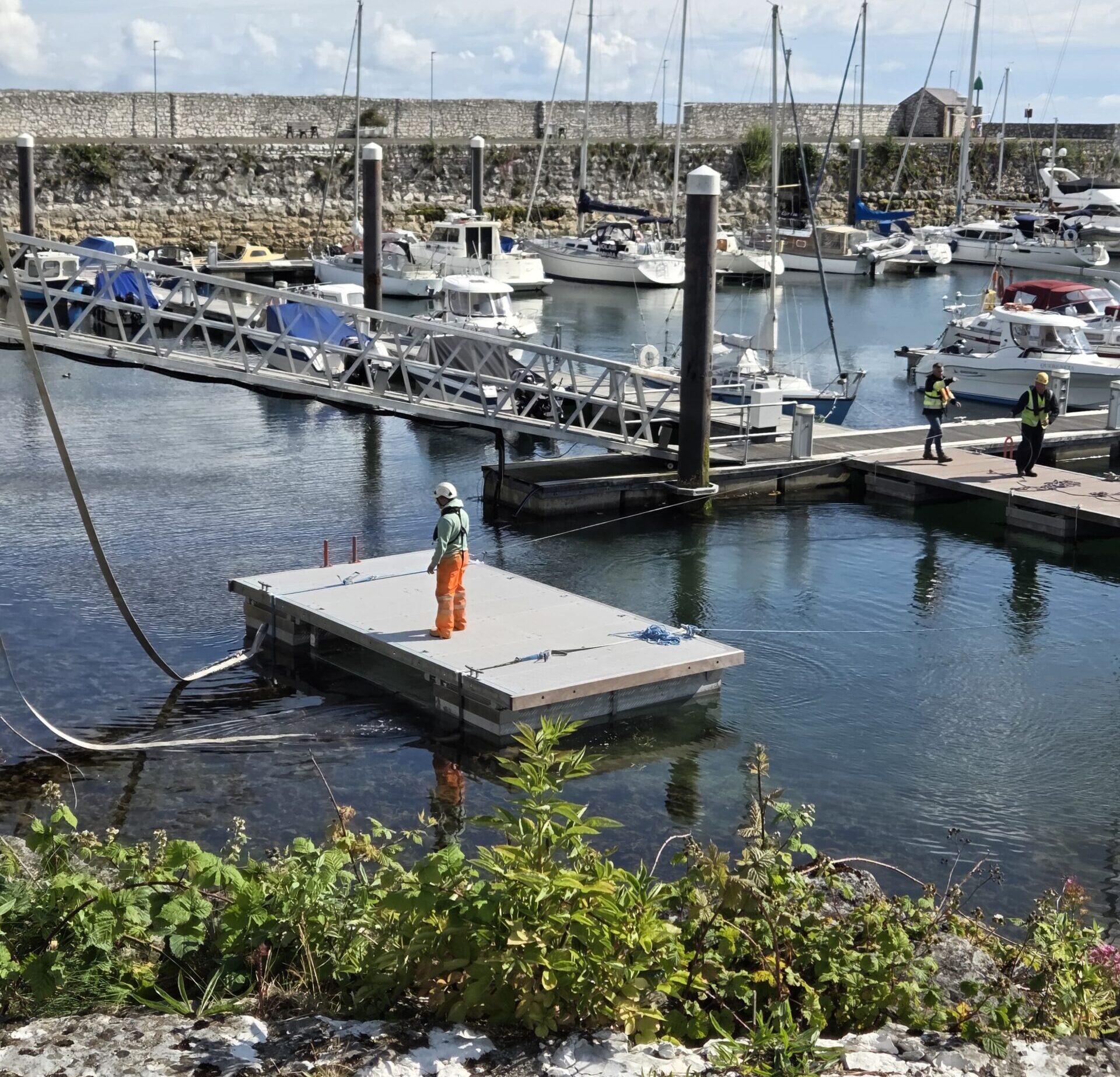
Our latest collaboration with Ulster Wildlife at Glenarm Marina in County Antrim shows how we harnessed one of our leisure pontoons into raising the next generation of native oysters.
| Client | Ulster Wildlife |
| Date | Summer 2026 |
| Where | Glenarm Marina, Ballymena, Co. Antrim |
Native oyster numbers around the UK and Ireland have fallen by roughly 95% since the 1800s, a decline caused by overfishing, disease, pollution and the steady loss of habitat. Yet these small creatures punch well above their weight ecologically. A single oyster can filter up to 200 litres of water a day, and healthy reefs help clear the water column, support seagrass beds and give fish and other species somewhere to shelter.
Ulster Wildlife has been leading the charge on restoration in Northern Ireland since 2022, when it launched the region’s first native oyster nursery at Bangor Marina. Looking to build on that success at Glenarm, the charity approached us with a request to design a submerged platform capable of holding far more oysters than a traditional basket setup. It also had to be simple enough to monitor and within a modest budget.
“This pontoon design was an experiment to see how oyster nurseries – which typically use baskets attached to the side of pontoons – could be adapted to be directly integrated into the pontoon,” explains Dr Nick Baker-Horne of Ulster Wildlife. “I outlined our desires and Inland and Coastal designed a great pontoon that met our needs.”
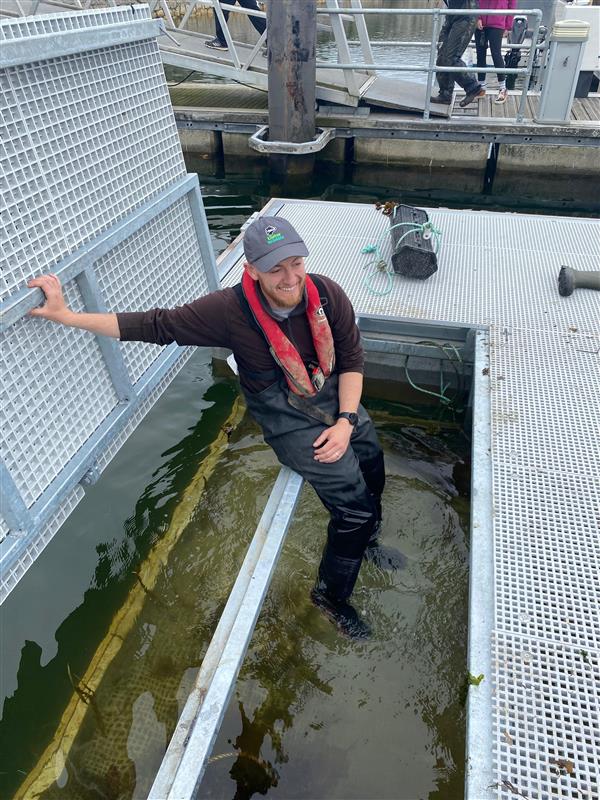
Kevin Treacy, one of our Project Managers who led the design work, explains how the team approached it: “Starting with our standard GRP decked leisure pontoon as a basis, we fabricated a base that could fit between the spacing of our floats and bolted to the underside. To allow ease of access, we modified the deck, introducing hinged hatches to access the sunken platform from deck level.”
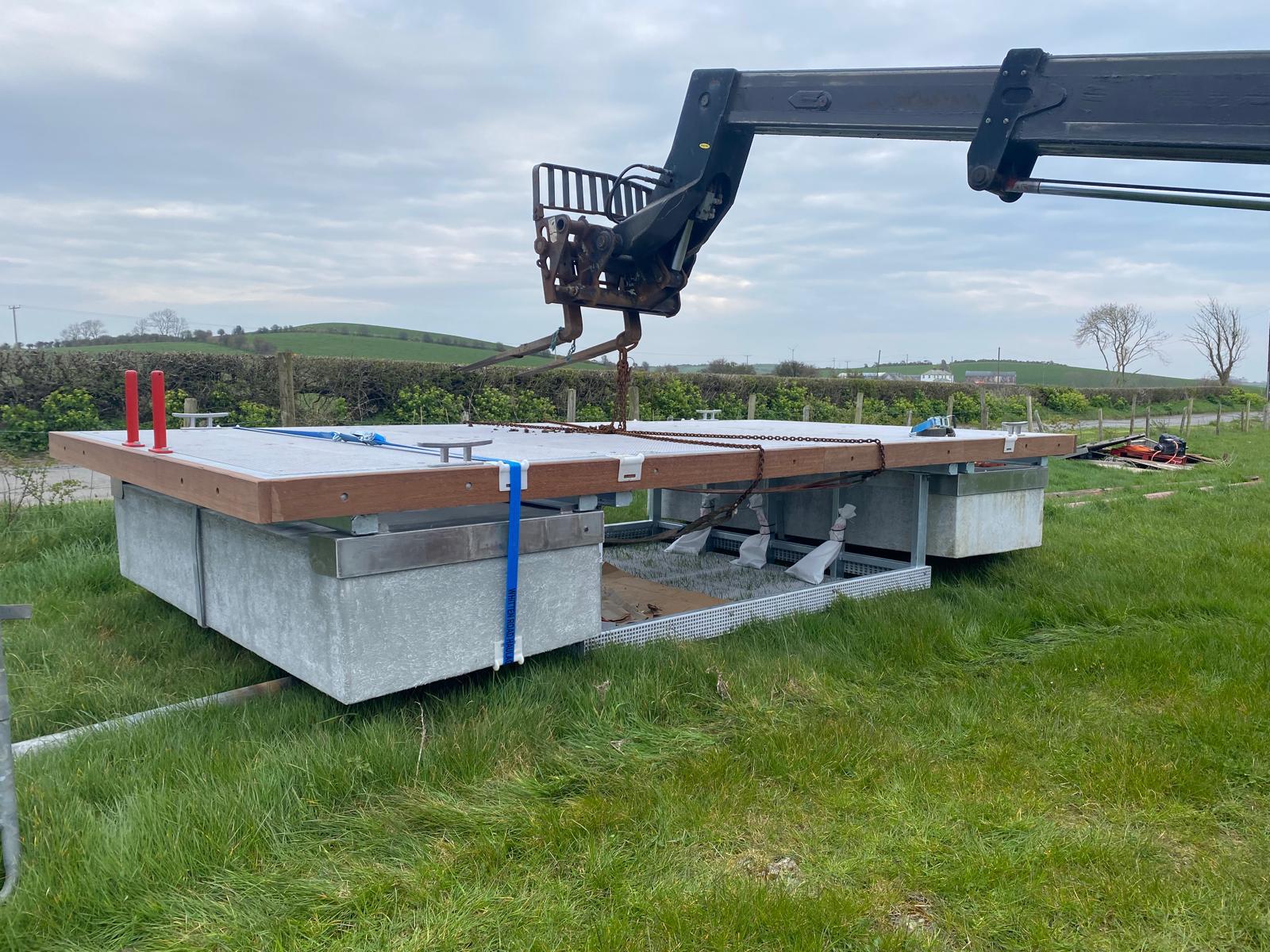
Above the waterline, it looks like any other 6m x 3m leisure pontoon. Below it, hidden beneath the deck, sits the sunken platform that makes the whole concept work.
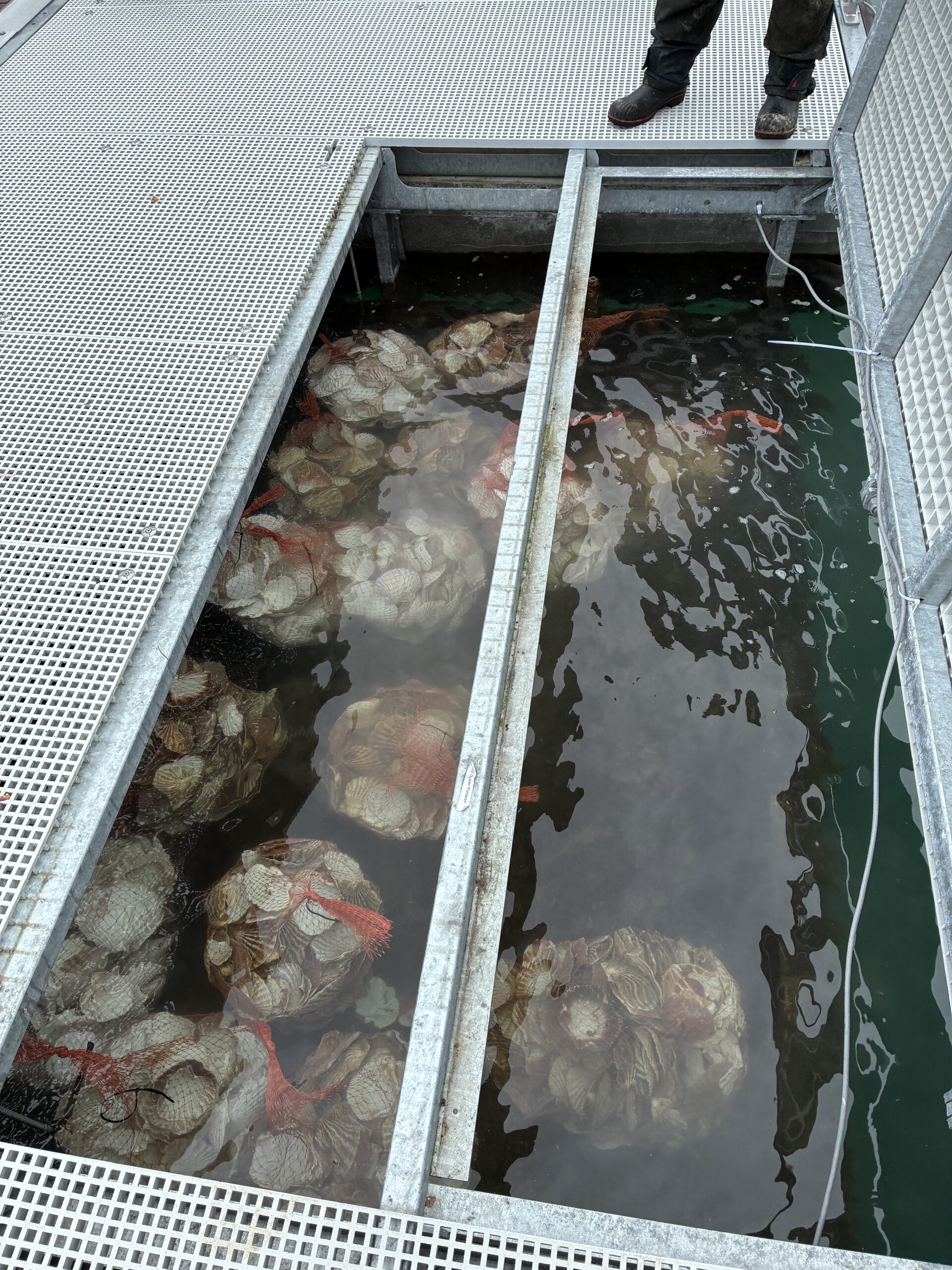
Rather than relying on separate cages dotted along the pontoon’s edge, the design gives oysters one continuous space to colonise and grow into a genuine reef. Ulster Wildlife has already seeded the platform with 5,000 juvenile oysters (spat), and the early signs are promising.
Lifting the platform clear of the seabed appears to have boosted survival rates significantly, shielding young oysters from predators during the stage when they’re most exposed. As a bonus, the structure also picks up less marine fouling than basket systems, cutting down on maintenance.
“It’s been a great addition to the nursery at Glenarm, allowing us to deploy many more oysters onto the site,” says Dr Baker-Horne.
Importantly, none of this comes at the cost of usable marina space – the pontoon still functions as a standard mooring point above the reef below. Ulster Wildlife has now fitted an AI-powered camera to track how fish and other marine life interact with the structure, and is looking into whether the same design could one day support rescued seagrass fragments as well.

Glenarm shows what’s possible when marina infrastructure is designed with more than one purpose in mind. If your marina wants to explore something similar, get in touch: sales@inlandandcoastal.com.