Transforming access to the iconic Padstow–Rock ferry with a new heavy-duty pontoon and gangway, providing safer, more accessible and reliable boarding for passengers and crew.
| Client | Padstow Harbour Commissioners |
| Date | Spring 2026 |
| Where | Public ferry landing, Padstow Harbour |
Set against the beautiful backdrop of Cornwall’s River Camel estuary, the Padstow–Rock ferry provides an important connection for local residents and visitors alike.
Inland & Coastal was appointed by Padstow Harbour Commissioners to design, manufacture and install a new public ferry landing, improving safety, accessibility and operational efficiency at one of Cornwall’s most popular harbours.
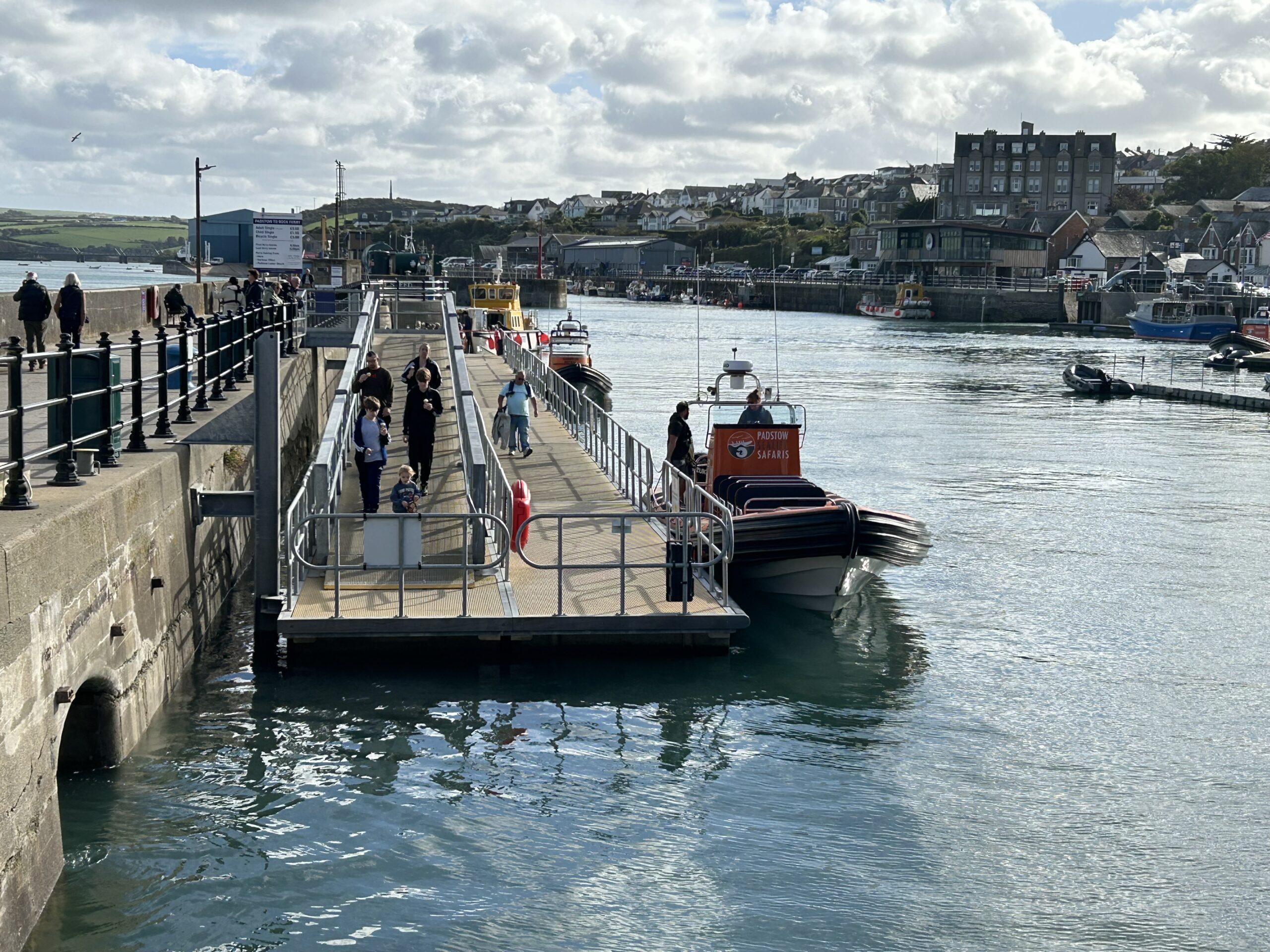
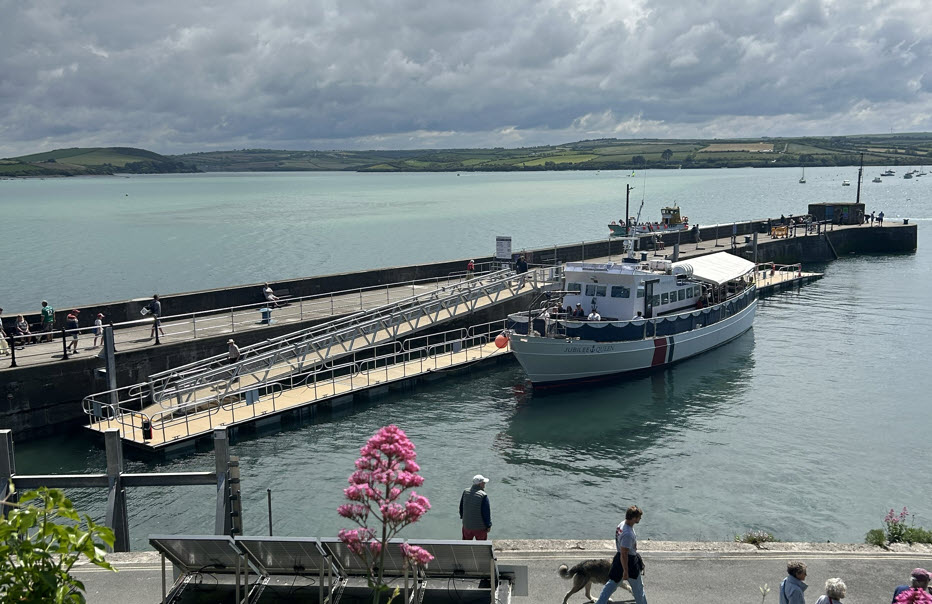
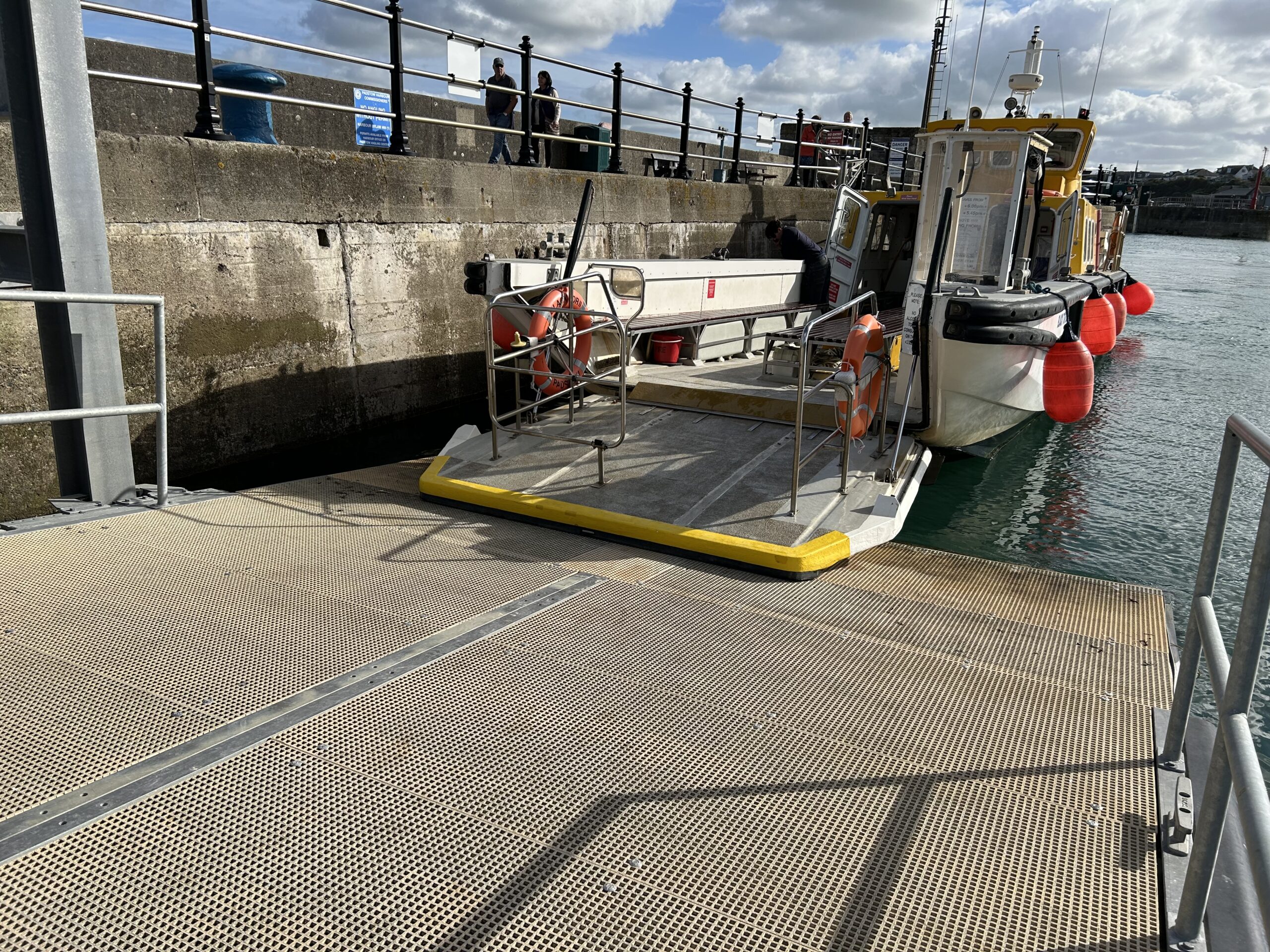
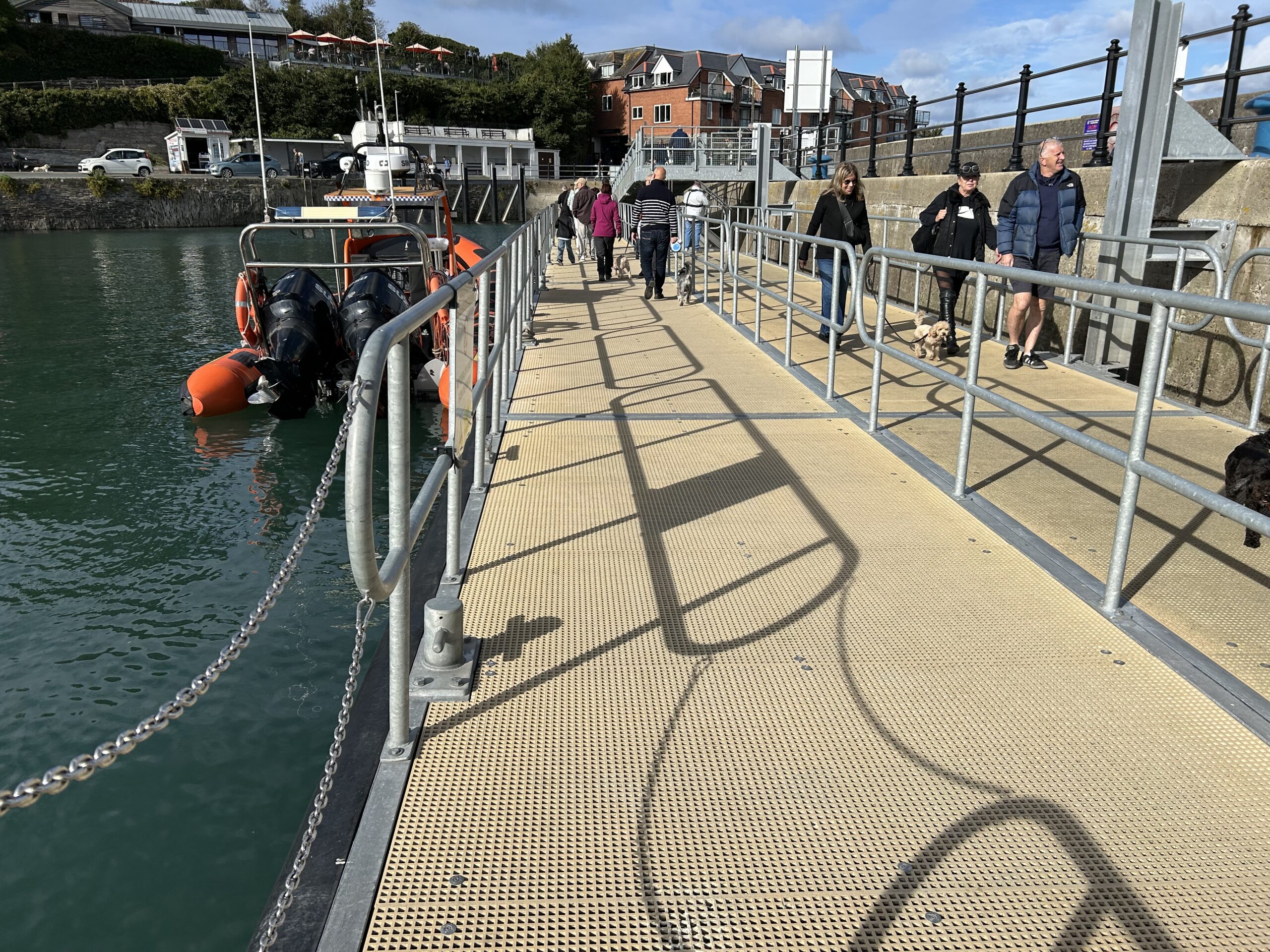
The project involved replacing the existing tidal slipway boarding arrangement with a purpose-designed heavy-duty pontoon and 24m access gangway, providing a safer, more reliable and inclusive way for passengers to board and disembark the ferry.
Challenges
Previously, passengers boarded the ferry via a tidal slipway on the outer harbour wall. Depending on tidal and weather conditions, this could make boarding challenging, particularly for passengers with reduced mobility.
The new landing needed to accommodate the ferry’s distinctive landing craft-style boarding arrangement while operating within a busy working harbour shared by fishing vessels, leisure craft and tourism businesses.
With limited working space, significant tidal variations and a prominent waterfront location, the challenge was to deliver a safe, accessible and reliable solution with minimal disruption to harbour operations.
The solution
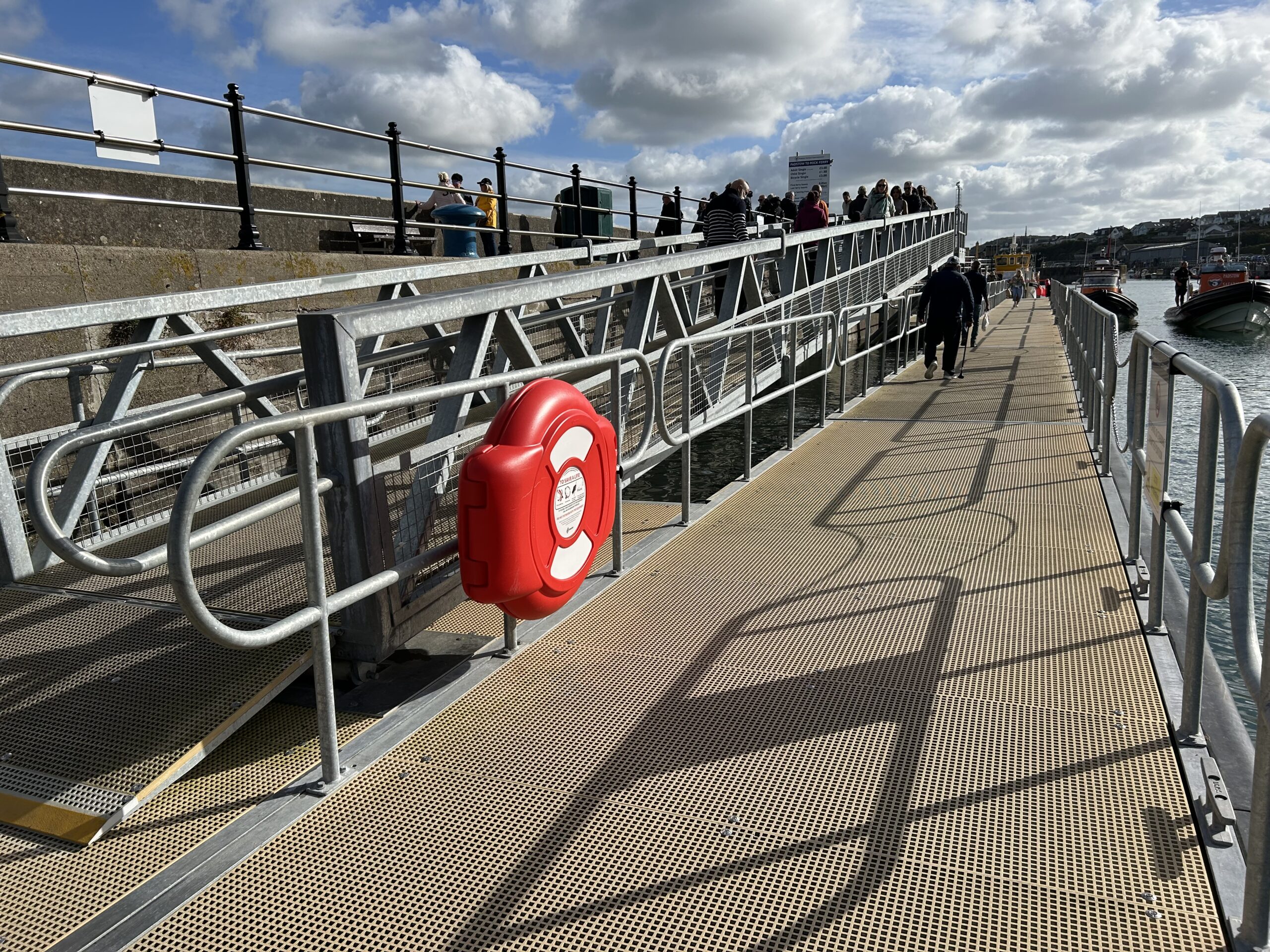
We designed and installed a bespoke heavy-duty concrete pontoon with a 500mm freeboard and durable GRP decking, creating a stable and secure boarding platform.
A 24m long, 1.5m wide aluminium gangway connects the pontoon to a fixed cantilever shore frame, providing improved access between the harbour and ferry landing.
Accessibility was central to the design process.We worked with Geoff Holt MBE, record-breaking quadriplegic yachtsman and founder of the Wetwheels Foundation, whose experience and insight helped inform and validate the accessibility approach.
“Earlier this year I was delighted to have the opportunity to share my experience of accessibility, particularly accessibility for disabled people at the interface between land and sea,” says Holt. “I was contacted by Inland and Coastal and invited to make suggestions regarding the challenges faced by the operators of the Padstow ferry – an important route for holidaymakers and local foot passengers crossing the Camel estuary to Rock.
“Being a traditional Cornish harbour with a high tidal range presented several challenges, not least for those in wheelchairs, embarking and disembarking the ferry. Speaking to the management team which included local stakeholders, I was pleased to learn that everyone approved a common sense approach. I very much believe common sense to be the way forward, but that entails having a good accessibility plan, thorough risk assessments and detailed operating procedures.
“Tidal environments, particularly when embarking on disembarking disabled people, including wheelchair users and those less stable on their feet, are always going to be a challenge and safety must take precedence, but there is also a place for common sense. Removing barriers to participation is something I’m passionate about, particularly barriers which prevent access to blue spaces like the sea. Congratulations to the team involved, the end result looks wonderful and I can’t wait to take a trip to Padstow to try it out”.
The installation was carefully coordinated with the Padstow Harbour team to minimise disruption to ongoing harbour operations.
The Outcome
The completed installation has transformed the ferry landing, providing a safer, more dependable and accessible boarding experience for passengers and crew.
The new pontoon also offers a versatile, multi-purpose facility that can support wider harbour operations, delivering long-term benefits beyond the ferry service itself.
“The new pontoon installation has provided Padstow Harbour with a versatile, multi-purpose access system that has significantly improved safety for both passengers and crew,” comments Bryn Phillips, Harbour Master at Padstow Harbour. “It provides a much safer and more reliable way for people to board and disembark the ferry, while also offering greater flexibility for other harbour operations.”
The Padstow project demonstrates how thoughtful marine engineering can make a meaningful difference to everyday harbour operations, improving safety and accessibility while respecting the needs of a busy working waterfront.
It also reflects our ongoing Get On Board Safely initiative, helping ports and harbours provide safer, more inclusive access between vessels and the shore.